Lyophilisation: Why Freeze-Drying Matters for Peptide Stability
Article Summary
Lyophilisation, or freeze-drying, is the process of removing water from a product by first freezing it and then reducing…
Peptides in aqueous solution are subject to hydrolysis, oxidation, and aggregation.
The process involves three stages: freezing, primary drying, and secondary drying.
Lyophilisation is not just a presentation format — it is a stability decision. We explain the science of freeze-drying, how it affects peptide shelf life, and what to look for in a lyophilised product.
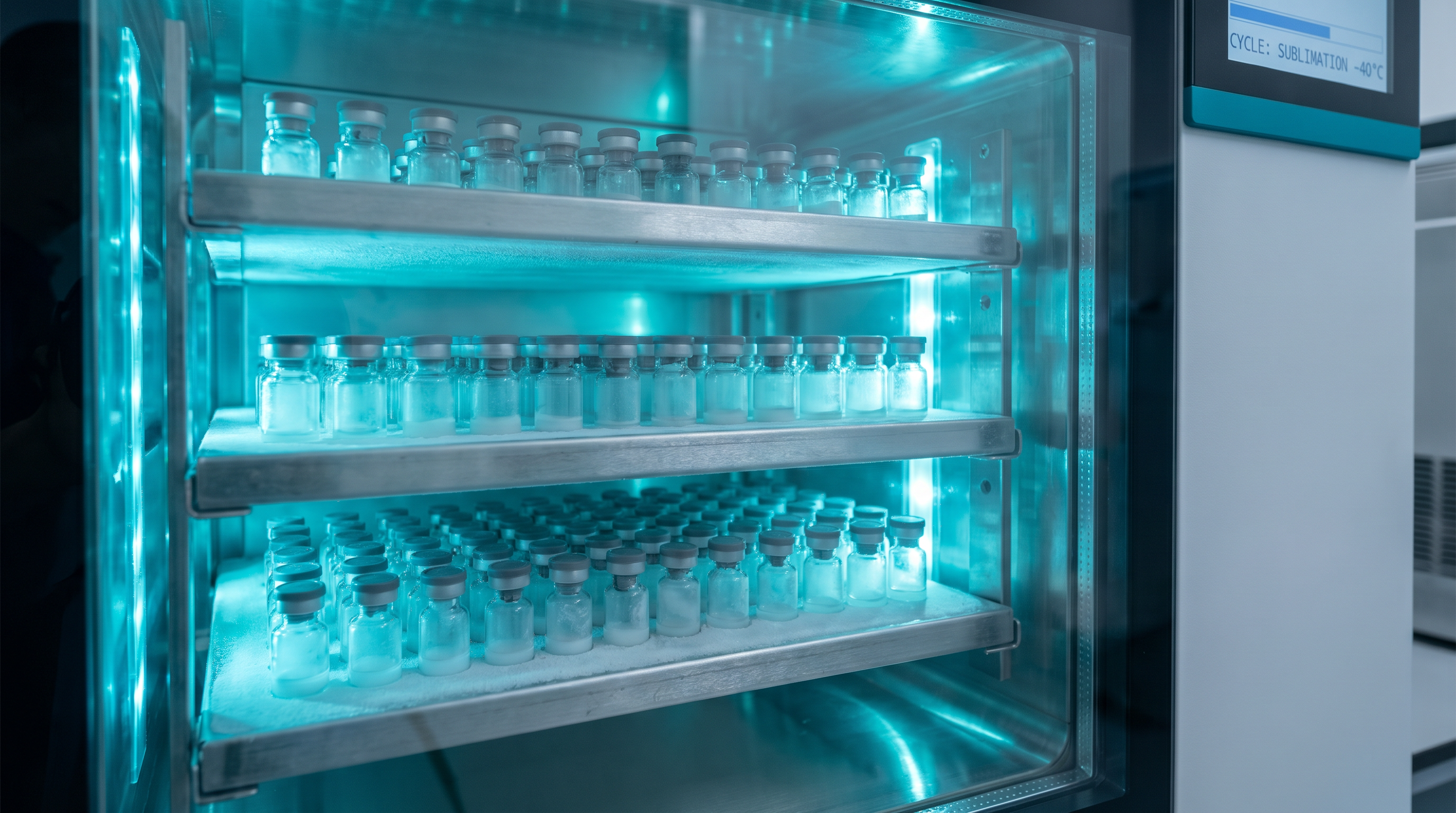
Lyophilisation, or freeze-drying, is the process of removing water from a product by first freezing it and then reducing the surrounding pressure to allow the frozen water to sublimate directly from solid to vapour. For peptides, lyophilisation is the preferred presentation format because it significantly extends shelf life and reduces the risk of degradation during storage and transport.
Why Peptides Degrade in Solution
Peptides in aqueous solution are subject to hydrolysis, oxidation, and aggregation. These degradation pathways are temperature-dependent and accelerate significantly above 4°C. For many research peptides, a liquid formulation at room temperature may lose meaningful potency within days or weeks. Lyophilisation removes the aqueous environment that drives these reactions, dramatically slowing degradation.
The Lyophilisation Process
UK Peptide Manufacturing & Supply
Thanet Labs is a UK-based peptide manufacturing and supply facility working towards MHRA manufacturing authorisation. We are establishing supply relationships with research institutions, universities, and pharmaceutical development partners. Enquiries are welcome at this stage.
Register InterestThe process involves three stages: freezing, primary drying, and secondary drying. In the freezing stage, the product is cooled to below its eutectic point, forming a solid matrix. Primary drying removes the bulk of the water through sublimation under reduced pressure. Secondary drying removes residual bound water through desorption, typically at slightly elevated temperatures.
What to Look For in a Lyophilised Product
A well-lyophilised peptide cake should be white or off-white, uniform in appearance, and free from collapse or melt-back. Residual moisture content should be below 3% by Karl Fischer titration. The product should reconstitute readily in the specified solvent without particulates or cloudiness. A credible supplier will have cycle validation data available and will include moisture content results in the batch COA.
References
- 1.Rey L, May JC (eds). Freeze-Drying/Lyophilization of Pharmaceutical and Biological Products. 3rd ed. Informa Healthcare, 2010.
- 2.Carpenter JF, et al. Rational design of stable lyophilized protein formulations. Pharm Res. 1997;14(8):969-75.
- 3.ICH Q1A(R2). Stability Testing of New Drug Substances and Products. 2003.